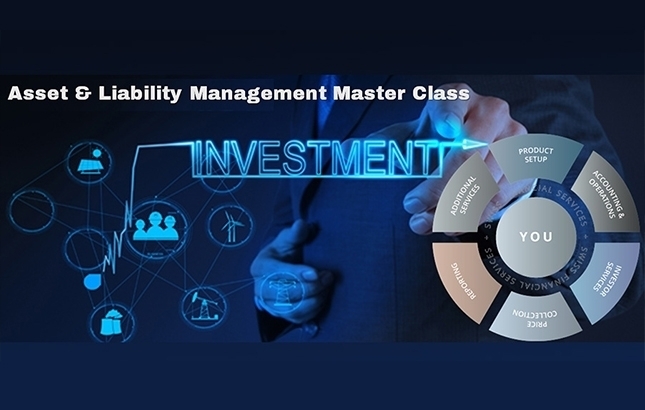
Asset and Liability Management (ALM) Masterclass
We provide platform for Public training, In-house, to all clients and individual who seek to learn and educate.






























Course Overview
While people are conscious that credit losses such as those which triggered the 2008 global financial crisis can trigger bank failure, they are less aware that banks holding credit risk–free assets are also prone to collapse. The collapse of Silicon Valley Bank has highlighted once again that banks can collapse when they pursue inappropriate asset liability management strategies. Mark–to–market losses on unhedged fixed income portfolios become realised losses if these losses trigger
withdrawals, forcing asset sales, as depositors lose confidence in the bank. Uninsured deposits magnify the risk of withdrawal since the holders of those deposits are especially conscious of the bank’s financial position.
BIZENIUS Masterclass reviews the pivotal role of asset and liability management in the enterprise-wide risk management of a financial institution. Using case studies that mimic real-life scenarios faced by ALM practitioners, learners gain a strong understanding of how asset and liability management can optimize a financial institution’s portfolio and support organizational success. Objectives of this ALM programme is to introduce the participants to a hands-on holistic approach to the entire Asset Liability Management domain including various analytical tools used in ALM.

BENEFITS OF ATTENDING
- The role and function of ALM within the bank
- Describe ALM framework and applications.
- Detail the key sources of liquidity risk and stress-testing elements.
- Performance measurement and capital allocation across business units.
- Identify risks to the balance sheet caused by stakeholder behavior.
- Discuss going concern and contingency liquidity plans.
- Calculate and apply standard and key market risk metrics
- Identify and manage interest and currency rate risk on the balance sheet.
- Evaluate the management of capital.
- Detail the key sources of liquidity risk and stress-testing elements
- The “Best Practices” in identifying, assessing, managing and monitoring liquidity risk in ALM
- Best Practices in Fund Transfer Pricing and Bank Cost of Funds analysis
- New Basel 4 Regulation concerning IRRBB and Market Risk
- Assess the risk to a bank’s net interest margin (NIM)
- Implement hedging policies to manage interest rate risk in the banking book
- Discuss the implications and optimization of a bank’s capital structure.
- Provide a balance between strategic perspectives and analytical/technical concepts in ALM
- Performance measurement and capital allocation across business units.
- A bank’s strategic & tactical management tasks and the role of the ALM framework
- Contribute to the development of a bank’s ILAAP and contingency funding plan (CFP)
WHO SHOULD ATTEND
- ALCO Team
- Risk Team
- Capital Management Team
- ALM professionals
- Credit Risk Team
- Cash Managment Team
- Finance professionals
- Accounting professionals
- Forex Team
- Business Heads
- Risk Management
- Operational Risk Management
- Accounting professionals
- Bank supervisors
- Financial Controllers
- ALCO Professionals
- Corporate Treasurers
- Dealers
- Investment Managers
- Auditors
- Financial Analysts
- Accountants and Finance Staff


IN-HOUSE
Our Tailored Learning Offering
Do you have five or more people interested in attending this course? Do you want to tailor it to meet your company’s exact requirements? If you’d like to do either of these, we can bring this course to your company’s office by offering our classroom program or LIVE Online. You could even save up to 50% on the cost of sending delegates to a public course and dramatically increase your ROI.
Top Quality
From the Boardroom to the front line, we can deliver engaging, multi-faceted learning programmes that will nurture the skills needed to fast-track development and enable teams to flourish.
Best Way
We combine the right blend of formal, informal, online and classroom techniques to increase your employees’ knowledge retention, drive collaboration, and create social learning communities.
top courses








Request for a Call Back
Trusted Clients


































Amazing Experience
"We worked with BIZENIUS for our Fresh Graduates Program thru one of our clients. I must say that they are simply amazing. At each step of the sessions, Knowledge Transfer and Practical Learning were emphasized upon, with daily evaluations to verify learning. Happy to say that we are so happy that our partners chose BIZENIUS to deliver this critical session for us. Looking to work together in future."
Sustainable Relationship with BIZENIUS
“It is always a pleasure to work with BIZENIUS. We have been partnering with BIZENIUS since 2016 and we see improvements with each session. The courses are highly Interactive, and their lecturer’s makes it easy to understand the materials. We look forward to working with BIZENIUS on a variety of courses. We are happy with the way this relationship has evolved.”
Practical Approach, Hand on Learning.
“BIZENIUS organized NEBOSH Oil and Gas Certificate for us. The sessions in the preparatory training were well complimented with real life case studies and practical examples. We enjoyed the 5 days training session leading up to the examination. Everything was organized with meticulous details to ensure a great learning experience and success at the examination. Thank you.”
Relevant and Well Organized.
“The training was very well organized. The content was very relevant to my role. The interactive discussion was encouraged, and the trainer was also very knowledgeable of the subject matter. I would recommend this training to all who are involved at some stage of Risk, ICAAP or ILAAP.”